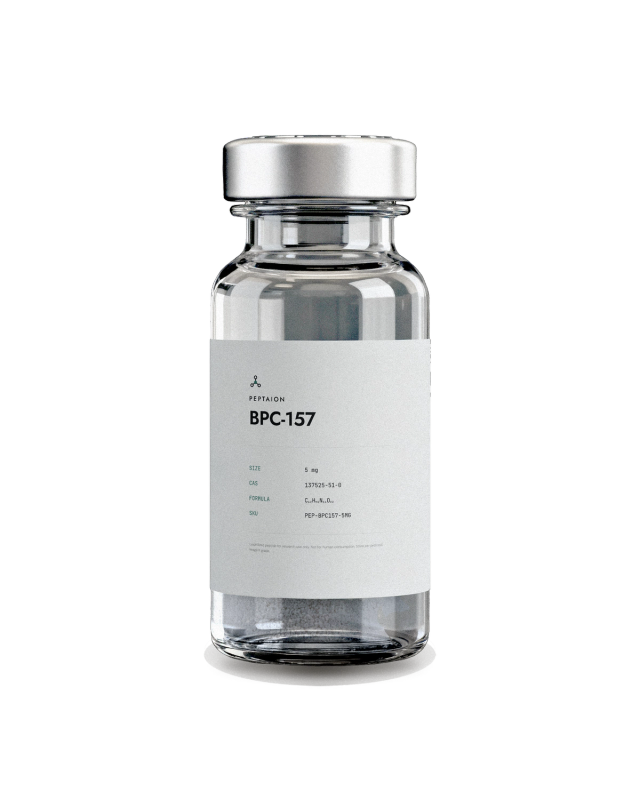
HPLC certificate of analysis pending — typically published within a month of batch receipt.
Research at a glance
BPC 157 (Body Protection Compound 157) is a synthetic pentadecapeptide derived from a sequence identified in human gastric juice. Preclinical literature characterises it as a cytoprotective and pro-angiogenic agent, most studied in models of connective-tissue and gastrointestinal injury. The evidence base is predominantly animal and in vitro; controlled human data remain limited.
In rodent models of tendon and ligament injury, BPC 157 administration was associated with accelerated fibroblast outgrowth and more organised collagen deposition.[2]
AnimalEmergingPreclinical studies have reported angiogenic and cytoprotective effects, including up-regulation of VEGF-related pathways in injured tissue.[3],[1]
In vitroAnimalEmergingIn experimental gastrointestinal-injury models the peptide is described as stable in gastric juice and as mitigating mucosal lesion formation.[1]
AnimalEstablishedNarrative reviews note that current musculoskeletal evidence derives predominantly from animal work, with human trials still limited.[2]
ReviewPreliminary
What the research does not show
No adequately powered human clinical trials were identified in this literature search; reported effects derive from animal and in vitro models and have not been established in humans. Pharmacokinetics, oral bioavailability, and long-term safety in humans remain uncharacterised.
Handling & storage
Lyophilized (sealed): store at −20 °C, protected from light.
Reconstituted: store at 2–8 °C; use within a few weeks.
Avoid repeated freeze–thaw cycles and prolonged light exposure.
Reconstitution reference — concentration calculator
Enter a volume of bacteriostatic water to see the resulting concentration of the reconstituted vial.
A concentration reference for lab handling — not a dose or administration instruction.
Studied alongside
Compounds investigated together in the research literature, and how they compare. Shared research focus is marked *; the rest is where they differ.
BPC 157 and TB 500 (thymosin β4) are frequently investigated together in preclinical soft-tissue injury models. Reviews describe them as acting through distinct but complementary pathways — BPC 157 associated with angiogenesis and fibroblast activity, TB 500 with actin regulation and cell migration.
Compare the two compounds
References
References (5)
- 1.Józwiak M et al., Pharmaceuticals (Basel) 2025Pharmaceuticals (Basel), 2025· Review
- 2.McGuire FP et al., Current Reviews in Musculoskeletal Medicine 2025Current Reviews in Musculoskeletal Medicine, 2025· ReviewMeasured: musculoskeletal healing mechanisms + safety
- 3.Sikiric P et al., Pharmaceuticals (Basel) 2024Pharmaceuticals (Basel), 2024· ReviewMeasured: pleiotropic activity + neurotransmitter relations
- 1.Sikiric et al., gastrointestinal pentadecapeptide BPC 157 review · Current Pharmaceutical Design, 2011Sikiric P, et al. Stable gastric pentadecapeptide BPC 157: novel therapy in gastrointestinal tract. Curr Pharm Des. 2011;17(16):1612–1632.
- 2.Chang et al., BPC-157 and tendon healing · Journal of Applied Physiology, 2011
Sources last reviewed 19 Jul 2026