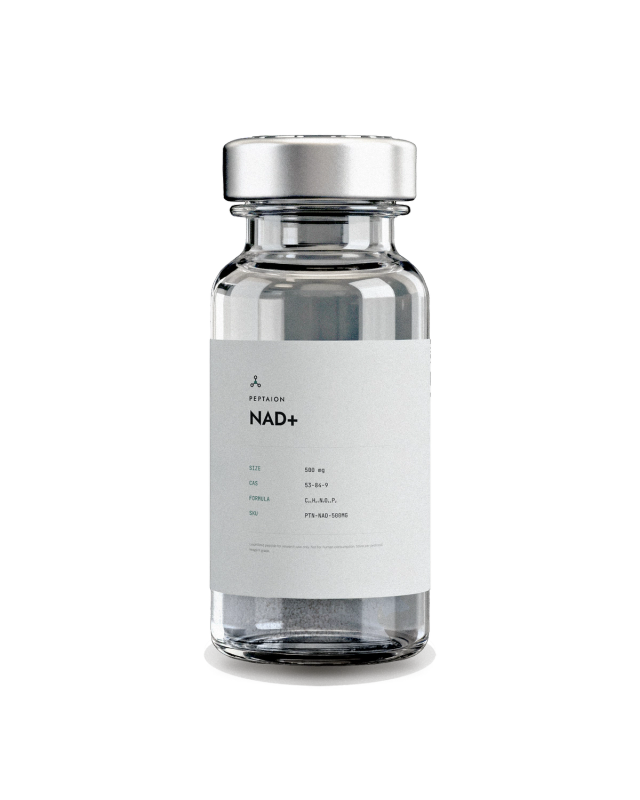
HPLC certificate of analysis pending — typically published within a month of batch receipt.
Research at a glance
NAD+ (nicotinamide adenine dinucleotide) is an endogenous dinucleotide coenzyme that functions in cellular redox reactions and, together with its precursors such as nicotinic acid, nicotinamide, nicotinamide riboside and nicotinamide mononucleotide, is a substrate in energy metabolism and signalling. The literature characterises it as a cofactor implicated in mitochondrial function, epigenetic regulation and energy homeostasis, most studied in the contexts of aging, neurodegeneration, cardiovascular and cognitive disease models. The evidence base is predominantly preclinical—drawn from in vitro and rodent systems and mechanistic reviews—with controlled human data described as limited and requiring larger studies.
A review has summarised the roles of NAD+ and NADP in redox, signalling, epigenetic regulation and energy homeostasis, and has compiled safety, bioavailability and efficacy data from NAD+-related clinical trials in aging and neurodegenerative disease, while noting that established and newer precursors have been examined and that large-scale studies on dose, administration and long-term safety are still needed.[1]
ReviewEmergingIn CAR-T cells generated from aged female mice, NAD+ depletion was associated with mitochondrial dysfunction, reduced stem-like properties and limited in vivo functionality, and analyses of human data linked age and NAD metabolism to CAR-T therapy responsiveness, with NAD-pathway targeting reported to restore mitochondrial fitness in cells from older adults.[2]
In vitroAnimalHumanPreliminaryA systematic review of preclinical rat and mouse models has reported that NAD+ precursor administration was associated with attenuation of cognitive deficits across aging, Alzheimer's disease, diabetes, traumatic brain injury, vascular dementia and schizophrenia models, characterised through effects on inflammation, oxidative stress, apoptosis and mitochondrial function.[3]
ReviewEmergingA mechanistic review has examined NAD+ supplementation in the context of mitochondrial dysfunction in heart failure, describing associations with regulation of mitochondrial biosynthesis, antioxidant defences and autophagy via SIRT1 and SIRT3 activation in cardiomyocyte models.[4]
ReviewEmerging
What the research does not show
The human evidence identified in this search is limited in scale; larger controlled trials establishing exposure and long-term safety in humans are not yet available.
Handling & storage
Lyophilized (sealed): store at −20 °C, protected from light.
Reconstituted: store at 2–8 °C; use within a few weeks.
Avoid repeated freeze–thaw cycles and prolonged light exposure.
Reconstitution reference — concentration calculator
Enter a volume of bacteriostatic water to see the resulting concentration of the reconstituted vial.
A concentration reference for lab handling — not a dose or administration instruction.
References
References (4)
- 1.Zhang J et al., Nature aging 2025Nature aging, 2025· Review
- 2.Hope HC et al., Nature cancer 2025Nature cancer, 2025· In vitro, Animal, Human
- 3.Qader MA et al., BMC neuroscience 2025BMC neuroscience, 2025· Review
- 4.Yu F et al., Nutrients 2025Nutrients, 2025· Review
Sources last reviewed 19 Jul 2026