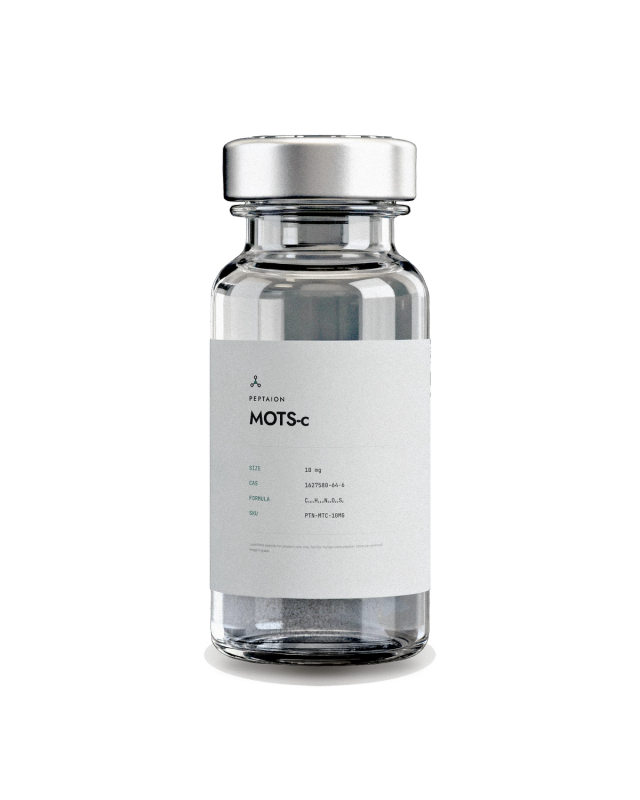
HPLC certificate of analysis pending — typically published within a month of batch receipt.
Research at a glance
MOTS-c (mitochondrial ORF of the 12S rRNA type-c) is a mitochondrial-derived peptide of 16 amino acids encoded by the 12S rRNA region of the mitochondrial genome. The literature characterises it as a metabolic regulatory peptide that translocates to the nucleus under metabolic stress and has been studied chiefly in relation to skeletal-muscle glucose handling, mitochondrial function, cardiovascular injury, and inflammation. The evidence base is predominantly preclinical, comprising in vitro and animal models alongside associational human sampling, with controlled human data remaining limited.
In a study combining plasma sampling from patients undergoing cardiopulmonary bypass with in vivo and in vitro models of lung ischemia-reperfusion injury, MOTS-c has been characterised as being associated with enhanced glycolytic flux, reduced oxidative stress, and suppressed ferroptosis in pulmonary microvascular endothelial cells, reportedly via an AMPK-HIF-1α-PFKFB3 pathway, with lower plasma concentrations observed in patients with acute lung injury.[1]
In vitroAnimalHumanPreliminaryA review has described MOTS-c as a 16-amino-acid mitochondrial-derived peptide that translocates to the nucleus during metabolic stress, whose circulating levels reportedly decline with age, and has synthesised preclinical literature examining its study in contexts such as aging, cardiovascular disease, insulin resistance, and inflammation.[2]
ReviewEmergingIn a study of marathon runners and sedentary subjects together with endurance-trained and sedentary mice, serum MOTS-c levels were reported to be closely associated with aerobic exercise capacity, and endurance training was associated with enhanced skeletal-muscle mitochondrial respiration alongside increased MOTS-c secretion and AMPK/PGC-1α pathway activation.[3]
AnimalHumanPreliminaryIn a streptozotocin-induced type 1 diabetic mouse model of diabetic cardiomyopathy, subcutaneous MOTS-c administration was associated with attenuated cardiac dysfunction and adverse remodeling, along with restored AMPK signaling and reduced inflammation in the diabetic heart.[4]
AnimalPreliminary
What the research does not show
The human evidence identified in this search is limited in scale; larger controlled trials establishing exposure and long-term safety in humans are not yet available.
Handling & storage
Lyophilized (sealed): store at −20 °C, protected from light.
Reconstituted: store at 2–8 °C; use within a few weeks.
Avoid repeated freeze–thaw cycles and prolonged light exposure.
Reconstitution reference — concentration calculator
Enter a volume of bacteriostatic water to see the resulting concentration of the reconstituted vial.
A concentration reference for lab handling — not a dose or administration instruction.
References
References (7)
- 1.Shen Z et al., American journal of respiratory cell and molecular biology 2025American journal of respiratory cell and molecular biology, 2025· In vitro, Animal, Human
- 2.Zheng Y et al., Frontiers in endocrinology 2023Frontiers in endocrinology, 2023· Review
- 3.Feng Y et al., Free radical biology & medicine 2025Free radical biology & medicine, 2025· Animal, Human
- 4.Wu N et al., Cardiovascular drugs and therapy 2025Cardiovascular drugs and therapy, 2025· Animal
- 5.Li N et al., Protein and peptide letters 2026Protein and peptide letters, 2026
- 6.Santhanam SS et al., Naunyn-Schmiedeberg's archives of pharmacology 2026Naunyn-Schmiedeberg's archives of pharmacology, 2026
- 7.Tang M et al., Scientific reports 2023Scientific reports, 2023
Sources last reviewed 19 Jul 2026