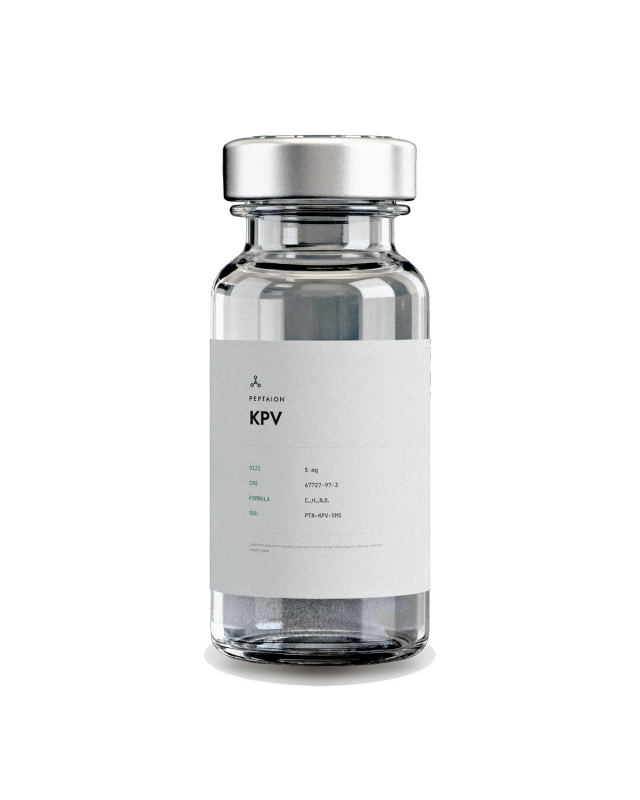
HPLC certificate of analysis pending — typically published within a month of batch receipt.
Research at a glance
KPV (lysine-proline-valine) is an endogenous tripeptide corresponding to the C-terminal fragment (residues 11-13) of α-melanocyte-stimulating hormone (α-MSH). Preclinical literature characterises it as an anti-inflammatory and antioxidant peptide, studied chiefly in cultured cell models of hepatic, epithelial, and vascular injury and in rodent models of colonic inflammation and vascular calcification, often in combination with drug-delivery systems. The evidence base is predominantly in vitro and animal; controlled human data are not represented among these studies.
In cultured human HepG2 hepatic epithelial cells exposed to oleic acid, KPV treatment has been studied in relation to reduced lipid accumulation and fatty acid synthase expression, with the reported mechanism characterised as ROS-dependent modulation of ERK, AKT/mTORC1, and PPARγ phosphorylation.[1]
In vitroPreliminaryIn cultured human HaCaT keratinocytes exposed to fine particulate matter (PM10), KPV treatment was associated with restored cell viability and reduced IL-1β secretion, with effects attributed to suppression of reactive oxygen species and modulation of the MAPK (ERK, p38) and NF-κB pathways and apoptosis-related proteins.[2]
In vitroPreliminaryIn rats with TNBS-induced ulcerative colitis, KPV delivered via a KPV-binding double-network hydrogel was studied as a model drug, with the reported alleviation of colitis and recovery of the colonic epithelial barrier characterised in the context of the hydrogel's adhesion to inflamed mucosa.[3]
AnimalPreliminaryIn in vitro and mouse models of vascular calcification, KPV co-assembled with rapamycin into carrier-free nanoparticles has been studied in relation to inhibition of calcification, with the reported mechanism described as suppression of inflammatory responses and activation of autophagy.[4]
In vitroAnimalPreliminary
What the research does not show
No human clinical studies were identified in this literature search; reported findings derive from in vitro and animal models and have not been established in humans. Human pharmacokinetics, effective exposure, and long-term safety remain uncharacterised.
Handling & storage
Lyophilized (sealed): store at −20 °C, protected from light.
Reconstituted: store at 2–8 °C; use within a few weeks.
Avoid repeated freeze–thaw cycles and prolonged light exposure.
Reconstitution reference — concentration calculator
Enter a volume of bacteriostatic water to see the resulting concentration of the reconstituted vial.
A concentration reference for lab handling — not a dose or administration instruction.
References
References (6)
- 1.Lee JY et al., Cytotechnology 2026Cytotechnology, 2026· In vitro
- 2.Sung J et al., Tissue & cell 2025Tissue & cell, 2025· In vitro
- 3.Zhao Y et al., Acta biomaterialia 2022Acta biomaterialia, 2022· Animal
- 4.Zhang L et al., Advanced healthcare materials 2024Advanced healthcare materials, 2024· In vitro, Animal
- 5.Berr AL et al., Oncogene 2023Oncogene, 2023
- 6.
Sources last reviewed 19 Jul 2026